
Table of Contents
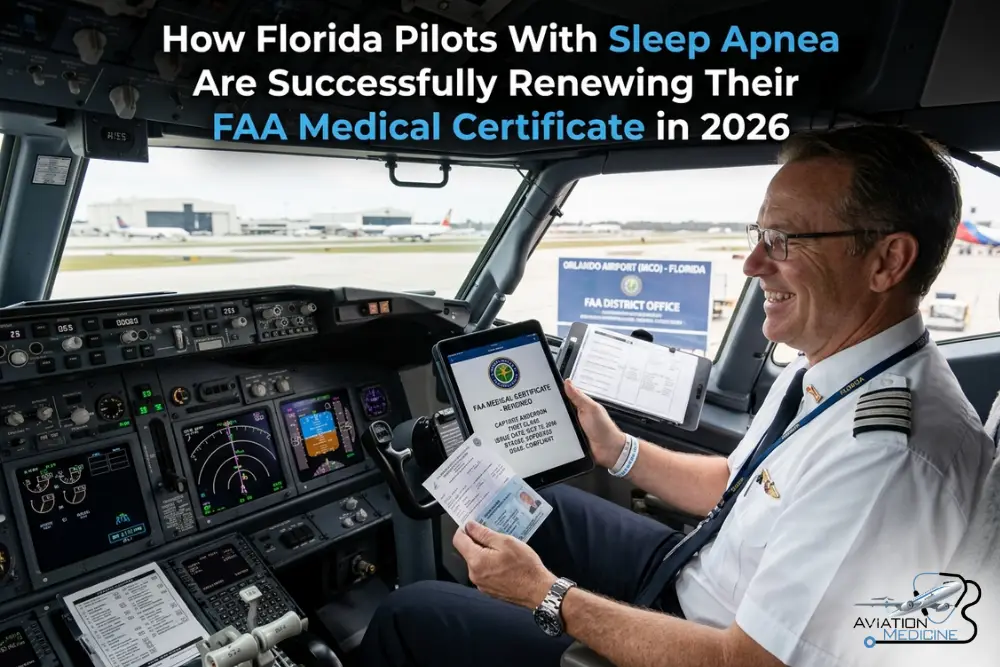
A pilot walked into our Fort Lauderdale office last month convinced his flying days were over. He’d just been diagnosed with sleep apnea and figured that was it grounded for good. He’s flying again now. So are hundreds of other pilots in his exact situation.
If you’re dealing with an FAA medical certificate sleep apnea Florida pilots are navigating right now, the process is a lot more manageable than the internet forums make it sound. Let’s break down what’s actually true versus what’s just anxiety talking.
Does Sleep Apnea Disqualify You From Flying?
This is the question that keeps pilots up at night, ironically. Straight answer: no, does sleep apnea disqualify you from flying not automatically, and not permanently. What actually happens is your case gets routed through a special issuance process once it’s diagnosed or suspected.
The FAA isn’t trying to ground you. They’re trying to confirm the condition is treated and controlled before signing off. Big difference.
How the FAA Actually Screens for This
Every AME uses a screening process during your exam, and it’s not as mysterious as people think. Here’s roughly how it goes:
- Your AME reviews your neck size, BMI, and reported symptoms like daytime fatigue or loud snoring
- If you land in a risk category, you’ll get referred for a sleep study
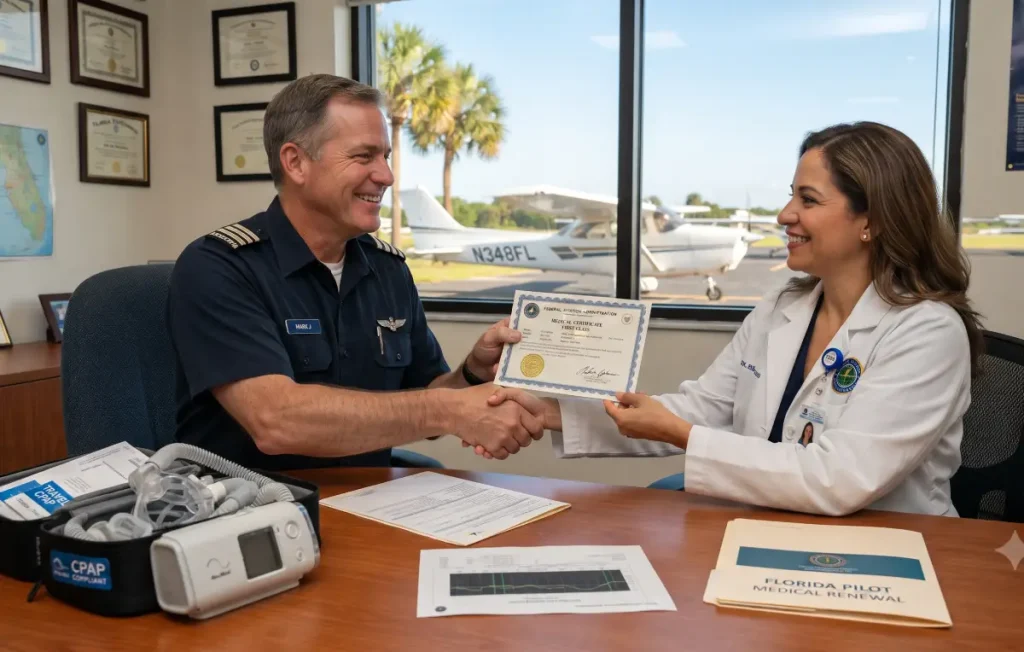
- If the study confirms OSA, you’ll need to start treatment, almost always CPAP
- Once you show compliance, the FAA issues a special issuance authorization
- Future exams just require proof you’re still using your treatment consistently
That’s it. It’s a process, not a wall.
BMI Sleep Apnea Screening FAA Examiners Actually Use
A lot of pilots assume there’s some secret cutoff number, but BMI sleep apnea screening FAA guidance is more nuanced than a single threshold. AMEs look at BMI alongside neck circumference, reported snoring, witnessed pauses in breathing, and daytime sleepiness. A higher BMI alone doesn’t disqualify anyone, it just raises the likelihood your AME will ask more questions or order a sleep study.
OSA Sleep Study Requirement for Pilots: What to Expect
If your AME flags you, the next step is usually a study. The OSA sleep study requirement for pilots can be met two ways:
Study Type | Where It’s Done | Typical Turnaround |
In-lab polysomnography | Sleep clinic, overnight | 1–2 weeks for results |
Home sleep apnea test | Your own bed | 3–7 days for results |
Home tests are increasingly accepted and a lot less disruptive, though your AME will tell you which one fits your situation.
If you’re working with one of our team, an Aviation Medical Examiner Florida can walk you through exactly which route makes sense before you even schedule anything.
Newly Diagnosed and Worried About Your Medical?
Getting the right documentation together early keeps your certification on track.
CPAP Compliance and Your Medical Certificate
Here’s where most pilots actually succeed or stumble: CPAP compliance pilot medical certificate approval hinges almost entirely on consistent usage data. Most CPAP machines track hours used per night automatically, and the FAA wants to see that data before granting special issuance.
Generally, you’re looking at:
- Using the CPAP at least 4 hours per night
- On roughly 70% of nights or more
- Documented for a minimum period before your exam
Fall behind on usage and it’s not a permanent problem, but it will delay your approval until the data looks consistent again.
FAA Sleep Apnea Special Issuance: The Part Nobody Explains Well
The term sounds intimidating but it just means the FAA is giving conditional approval instead of an outright certificate. FAA sleep apnea special issuance typically works like this: once you’re diagnosed, treated, and compliant, you get authorization tied to ongoing proof of treatment. Some pilots eventually qualify for AASI, which streamlines renewals so you’re not resubmitting a mountain of paperwork every single time.
It’s genuinely one of the more manageable special issuances out there compared to some other conditions the FAA reviews.
With summer flying season winding down and plenty of pilots catching up on postponed medicals before fall, now’s a good time to get ahead of any sleep apnea concerns before they turn into a scheduling headache later in the year.
Why Working With the Right Examiner Matters
Not every AME handles these cases the same way, and that matters more than people realize. Working with FAA Aviation Medical Examiners Florida pilots trust for sleep apnea cases specifically can shave weeks off your process, simply because they know what documentation to gather upfront instead of sending you back and forth.
Curious what else could ground a pilot unexpectedly? Learn more about Top 10 disqualifying medical conditions for FAA medical certification.
Final Thoughts
An FAA medical certificate sleep apnea Florida diagnosis brings up isn’t a career-ending event it’s a paperwork and compliance process, and thousands of pilots get through it every year. Dr. Auren Weinberg at Aviation Medicine has guided pilots through exactly this situation for over 25 years, combining HIMS training with real hands-on aviation experience as a pilot himself.
FAQs
Does sleep apnea disqualify you from getting an FAA medical certificate?
Do I need a sleep study before my FAA medical exam?
Only if your AME identifies risk factors during screening not every pilot needs one.
Can I still fly if I use a CPAP machine?
How does the FAA screen for sleep apnea risk during a medical exam?
What BMI triggers a sleep apnea evaluation for pilots?
Ready to Get Your Medical on Track?
Aviation Medicine offers First, Second, and Third-Class exams, plus HIMS and Air Traffic Controller evaluations with Dr. Auren Weinberg, a HIMS-trained AME with 25+ years of experience.
📞 Contact our Florida office today at (727) 648-2402 or email us at aweinberg@medavex.org to schedule your exam.